
Vieques travel tips
Everything below is written to save you the small frustrations that catch first-timers off guard.
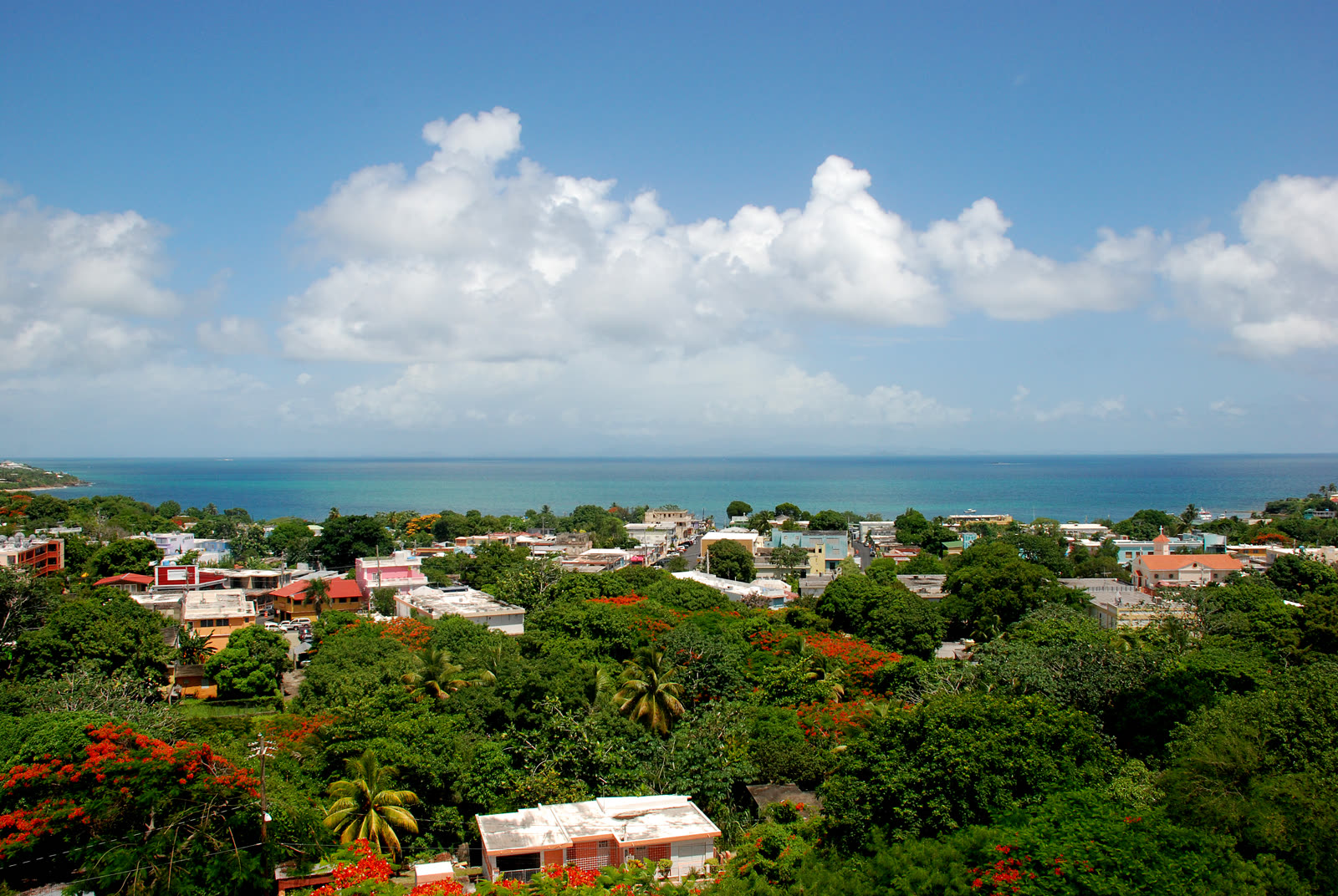
Getting to Vieques
Two ways in — ferry or small plane. Both leave from Ceiba on Puerto Rico's east coast, or you can fly direct from San Juan.
Ferry from Ceiba
- Book through PuertoRicoFerry. Only about 20% of the month's seats are released for online sales; the rest are sold at the ferry kiosk in person, so most travelers end up buying at the terminal.
- Passenger fast ferry: about 30 minutes. Cargo ferry: about 45. Fares around $2 one-way.
- Residents get priority. Weekends and holidays don't accept online reservations from tourists — plan around weekdays if you can.
- Check-in closes 10 minutes before departure. Arrive at the terminal an hour early.
- Parking at the Ceiba dock is roughly $8 a day.
Fly from San Juan (SJU)
- Cape Air and Vieques Air Link both run daily service to Vieques (VQS).
- About 25 minutes.
- Cheaper than a rental car + gas + parking for a couple, once you count the drive to Ceiba.
Fly from Isla Grande (SIG)
- SIG is Puerto Rico's smaller commuter airport in the Miramar district, ~15 minutes from SJU by taxi or a short trip from Old San Juan.
- Operators to Vieques (VQS): Vieques Air Link and Air Flamenco.
- Daylight service only.
Fly from Ceiba (RVR)
- Vieques Air Link and Air Flamenco both run 8-minute hops. The cheapest air option.
No TSA checkpoint at Isla Grande, Ceiba, or Vieques — arriving 30 minutes before your flight is fine at any of them. Only SJU has the usual security line.
Getting around Vieques
- EBikes are the easiest way to see the whole island. Ideal for solo travelers and couples: park anywhere, skip the parking fees at Sun Bay.
- 4x4 Jeep is the standard vehicle rental. Standard sedans cannot reach many of the best beaches on refuge roads.
- Book weeks in advance. Rental cars sell out; confirmed reservations sometimes fall through — a backup plan is worth having.
- Golf carts are not recommended. The roads eat them, and accidents are common.
- Públicos (shared taxis) run between Esperanza, Isabel Segunda, the ferry, and the airport.
- Watch for wild horses, cows, and dogs on the road, especially near dawn and dusk.
- Roads are potholed in many places. Slow down.
The Wildlife Refuge
- Nearly two-thirds of the island. Free to enter.
- Gates open sunrise to sunset. Get out before closing.
- Roads inside are unpaved and can be rutted or muddy after rain.
- Stay on marked roads and beaches. Large areas remain closed because of unexploded ordnance from Navy training years.
- No cell service in much of the refuge. Load offline maps.
- No facilities on most refuge beaches. Pack water, food, sun cover, and take everything out.
Money and connectivity
- One 24/7 ATM — Banco Popular in Isabel Segunda. Other ATMs work only during business hours.
- Two gas stations, both in or near Isabel Segunda. Fill up before heading to the refuge.
- Cell service is reliable in and around the towns, patchy on the refuge roads and west end.
- Cash is expected at food trucks and roadside stops.
What to pack
- Reef-safe sunscreen only.
- Water shoes for Playa Negra, Punta Arenas, and rocky entries.
- A hat, sunglasses, and beach umbrella — most refuge beaches have zero shade.
- Insect repellent for dawn and dusk.
- A headlamp for the walk to and from the bio bay launch.
- Your own snorkel gear if you have it, or rent at Black Beard Sports.
- Dry bag for boat and kayak days.
- Cash.
The bio bay tour
- Reserve a month or more ahead, especially for weekends and new-moon windows.
- Time your trip around the new moon. The three or four nights on either side of a new moon are peak; full-moon nights are effectively a blackout.
- Stay at least two nights. A single-night trip has no weather backup for the tour.
- No sunscreen, bug spray, or lotions on your skin the day of the tour. They harm the dinoflagellates. Shower first.
- No swimming. The bay is protected; tour operators keep you in the boat or kayak.
- The bay glows brighter in warmer water (May–October) — which overlaps hurricane season.
Food and groceries
- No supermarket in Esperanza. Morales and Colmado El Molino are in Isabel Segunda.
- Groceries are ferry-dependent — shelves thin out later in the day and after storms.
- Fresh produce is hard to find. Plan meals accordingly.
- Many restaurants close 1–2 days a week (often Sunday or Monday) and stop seating early. Confirm hours the day of.
- Prices are higher than the mainland because everything ships in.
Safety and etiquette
- Do not step off marked roads, trails, or open beaches. Decades of Navy bombing training left unexploded ordnance still being cleared. Fenced or signed danger zones are strictly off-limits.
- If you spot suspicious metal debris, don't touch it. Back away and report it to the refuge or local police.
- Populated areas and designated refuge beaches are cleared and safe. The warnings apply to closed backcountry.
- Playa Negra and Playa Grande have strong currents — walking beaches, not swimming beaches.
- Do not approach wild horses. They can kick and bite. Never get between a mare and a foal.
- No lifeguards except at Sun Bay.
When to come
- December through April — driest and busiest.
- May through October — warmer water, and the bay at its brightest.
- June through November is hurricane season, with the biggest storms usually August through October.
- Around the new moon for the bio bay, regardless of season.
- Two nights minimum, ideally more.
Next: Things to do or Beaches.